

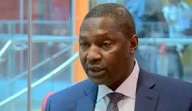

A former Attorney-General of the Federation and Minister of Justice, Abubakar Malami, SAN, has debunked claims that he is linked to terrorism financing.
Describing the allegations as baseless, misleading and politically motivated in a statement on Friday, Malami said his attention was drawn to a publication which suggested that he and other individuals had connections to persons described as terror suspects or alleged financiers.
The former minister, stated that the claims are “unfounded, unfair and contrary to both my record in public office and objective facts.”
He said, “First, I state clearly and unequivocally that I have never at any time been accused, invited, interrogated, investigated or charged by any security, law-enforcement, regulatory or intelligence agency—within or outside Nigeria—in respect of terrorism financing or any related offence.
“Secondly, even the retired military officer cited as the principal source in the said publication categorically admitted that he was not accusing me, or other named individuals, of financing terrorism.
“His own account, as reported, was limited to a vague assertion that certain suspects allegedly had some form of ‘business’ or ‘institutional’ relationship with various persons.
“That important clarification was, unfortunately, overshadowed by a headline and framing capable of misleading well-meaning members of the public into drawing inaccurate and damaging conclusions which was unfortunately politically manipulated by my political opponents to create mischievous insinuations implying my involvement in terrorism financing.
“Terrorism financing is a grave crime with devastating consequences for national security and human life. Any attempt—whether by direct allegation or indirect innuendo—to associate an individual with such an offence must be grounded in verifiable facts, due process and lawful findings, not in conjecture, speculation, or guilt by association.
“To suggest that lawful professional or institutional engagements can, without more, be read as evidence of terrorism financing is both mischievous and unjust. For the avoidance of doubt, my public record in office stands in direct contradiction to any insinuation of complicity in terrorism financing.”
Malami further highlighted key reforms he spearheaded as Attorney-General, including the establishment of an independent Nigerian Financial Intelligence Unit, the enactment of the Money Laundering (Prevention and Prohibition) Act, 2022, and the Terrorism (Prevention and Prohibition) Act, 2022.
He stressed that these reforms, which improved coordination among agencies such as the NFIU, the Central Bank of Nigeria and law-enforcement bodies, contributed to Nigeria’s eventual removal from the Financial Action Task Force (FATF) grey list.
He said, “During my tenure as Attorney-General of the Federation and Minister of Justice, I worked with other arms of government and relevant institutions to strengthen—not weaken—Nigeria’s legal and institutional framework against money laundering and the financing of terrorism.”
Malami added that engagement with a wide range of individuals is a normal feature of public service and should not be misconstrued as evidence of wrongdoing.
He advised the media to be responsible when reporting on national security matters, warning that careless publications could damage reputations and undermine confidence in state institutions.
He reaffirmed his commitment to the rule of law and Nigeria’s international obligations, noting that he reserves the right to seek redress over any publication that misrepresents his role in the fight against money laundering and terrorism financing.



1 COMMENTS