
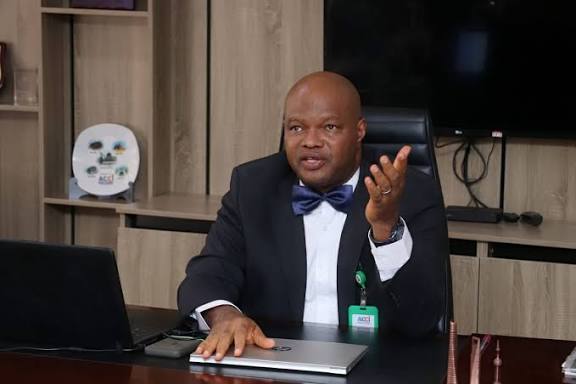

Mr Agabaidu Jideani, a legislative expert, says there are constitutional safeguards which allows the Clark of the National Assembly to correct identified discrepancies between a passed bill and an Act as signed by the President.
He said this during an interview with the News Agency of Nigeria (NAN) in Abuja on Tuesday.
NAN reports that there had been debates over the authenticity of the recently passed tax reform laws.
The controversy started when a member of the House of Representatives, Abdulsamad Dasuki, alleged discrepancies between the tax laws passed by the National Assembly and the versions later gazetted and made available to the public.
Jideani said that there was no need for the controversy as the law-making process had internal mechanism to rectify discrepancies.
“On Dec. 17, a lawmaker raised concerns in the House of Representatives regarding perceived variations between harmonised bills and published versions.
“The development has renewed public interest in constitutional provisions governing legislative authority and the separation of powers,’ he said.
According to him, since the Clark of the House was in possession of the National Assembly copy, all he needs to do is to reconcile it with the gazetted version.
“Central to this process is the Clerk of the National Assembly, a key legislative officer responsible for certification and documentation.
“Under the Act, the Clerk certifies a clean copy of each harmonised bill as a true reflection of legislative approval.
“The law also mandates the preparation of identical copies for the National Assembly, the President, and the Chief Justice of Nigeria,’’ he said.
Jideani, also Director-General of the Abuja Chamber of Commerce and Industry, said that the legislative procedures preserved the accuracy of bills after their passage.
He said that the safeguards were designed to promote transparency, accountability, and public confidence in Nigeria’s law-making process.
It would be recalled that the tax reforms are part of broader fiscal measures aimed at strengthening revenue generation amidst prevailing economic conditions.
The laws include the Nigeria Tax Act, Nigeria Tax Administration Act, Nigeria Revenue Service Act, and Joint Revenue Board Establishment Act.
The bills were initiated by the executive in 2024 and passed in identical form by both chambers of the National Assembly in early 2025. They are scheduled to come into effect in 2026.
(NAN)