

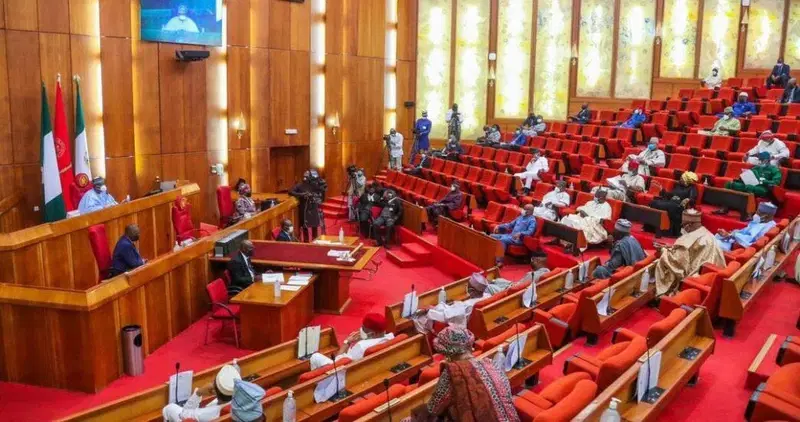

Abuja —The Senate has stated that the Independent National Electoral Commission (INEC) currently lacks the infrastructure and technical capacity to conduct electronic voting, stressing that the electronic transmission of results should not be mistaken for a full e-voting system.
Chairman of the Senate Ad-hoc Committee reviewing the 2026 Electoral Bill, Senator Adeniyi Adegbonmire, made the clarification during an appearance on *Arise News*, amid growing public debate over the National Assembly’s position on digital result transmission and the use of the INEC Result Viewing Portal (IReV).
According to him, IReV was created solely to display results that have already been manually counted and declared at polling units, not to conduct or record votes electronically.
“IReV is not an e-voting platform,” Adegbonmire said. “It is simply a portal where results that have been manually collated are uploaded for public viewing.”
The Senate recently set up a seven-member panel led by Adegbonmire to review the Electoral Act amendment bill, resolve grey areas, and harmonise differing views surrounding result transmission procedures.
Addressing concerns that the legislature may have weakened plans for digital elections, the senator dismissed claims that Nigeria had adopted or was ready to adopt electronic voting.
“Real-time transmission is only possible with a proper e-voting structure,” he explained. “INEC does not yet have that capacity. Perhaps in the next few years it may be feasible, but today, it is not in place.”
He described the ongoing controversy as largely driven by misinformation, adding that election results are still manually recorded on Form EC8A before any upload takes place.
“The presiding officer fills the form by hand first. Only after that can the result be uploaded or transmitted to the portal. Changing the wording from ‘transmit’ to ‘upload’ does not alter the process,” he said.
Adegbonmire also noted that the National Assembly cannot modify the design or configuration of INEC’s software through legislation, insisting that IReV will continue to operate based on its existing framework.
Highlighting logistical challenges across the country, the lawmaker said simultaneous nationwide uploads are unrealistic due to varying terrains and infrastructure gaps. He cited remote and riverine communities where election materials must be transported days in advance, sometimes by boat, resulting in staggered voting and counting times.
Because of these realities, he warned against setting rigid expectations for when results should appear online, as delays caused by poor network coverage or difficult terrain could fuel unnecessary suspicion.
“If results are declared at a polling unit and they appear online hours later, people may wrongly assume manipulation,” he said, urging the media to report such issues responsibly.
The clarification comes shortly after the Senate approved the electronic transmission of election results to IReV while retaining manual collation as a backup in areas facing technological difficulties.