
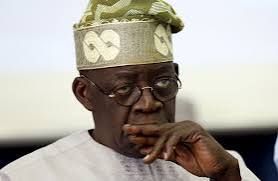
President Bola Tinubu has earmarked N5.41tn for Security, the single largest allocation in the proposed 2026 budget.
Disclosing this on Friday while presenting the N58.18tn 2026 Appropriation Bill to a joint session of the National Assembly, Tinubu said national security remained the foundation of economic growth, investment and social stability.
Under the proposal, defence and security will receive N5.41tn, ahead of infrastructure, education and health, reaffirming a pattern established in the 2024 and 2025 budgets, where security consistently attracted the highest sectoral funding amid persistent threats from terrorism, banditry and kidnapping.
The President stressed that without peace and stability, other sectors of the economy would struggle to thrive.
Earlier, the Federal Executive Council had approved the 2026 budget framework at an emergency meeting presided over by Vice President Kashim Shettima (for the first time).
Read Also:
Tinubu Earmarks N5.41tn for Security in Proposed N58.18tn 2026 Budget
Tinubu Seeks N’Assembly Approval to Extend 2025 Budget Implementation to March 2026
The council pegged total expenditure at N58.47tn, with heavy spending pressures from debt service, wages and security obligations.
Breaking down the 2026 proposal, Tinubu said the security vote would be deployed to modernise the armed forces, strengthen intelligence-driven policing, enhance border surveillance and support joint operations among security agencies.
“We will invest in security with clear accountability for outcomes because security spending must deliver security results,” he said.
He also announced the establishment of a new national counter-terrorism doctrine anchored on unified command, intelligence coordination and community stability.
Under the proposed framework, Tinubu declared that all armed groups operating outside state authority—including bandits, militias, kidnappers, armed gangs and violent cult groups—would henceforth be classified as terrorists, along with their financiers, informants and political or community enablers.
He argued that the tougher classification was necessary to close legal and operational gaps that had allowed violent groups to thrive for years.
Beyond security, the 2026 budget also proposes N3.56tn for infrastructure, N3.52tn for education, and N2.48tn for health.
Tinubu acknowledged the pressure on public finances but insisted that prioritising security was unavoidable.
“Without security, investment will not thrive. Without educated and healthy citizens, productivity will not rise. Without infrastructure, jobs and enterprise will not scale,” he said.
While he urged lawmakers to support the proposal, the president argued that the budget was designed to consolidate recent economic gains while restoring public confidence in the state’s ability to protect lives and property.
The move marks the third consecutive year that the administration since it began presenting national budgets in Novemebr 2023, has prioritized defence and security spending.