
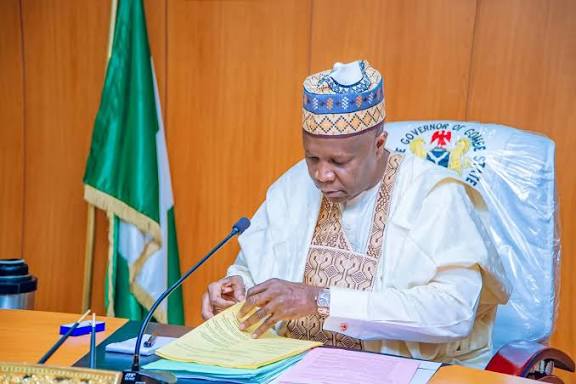
Gombe State Governor, Muhammadu Yahaya, has announced that his administration has produced a detailed policy framework, documented in a White Paper, aimed at addressing farmer–herder conflicts, banditry and other security-related concerns in the state.
The governor made this known on Friday during the inauguration of a high-level White Paper Implementation Committee on Grazing Reserves, Forest and Game Reserves, and Cattle Routes. He explained that the committee, made up of security professionals, legal experts and geospatial technology specialists, is mandated to convert government policies into practical and enforceable actions.
According to Yahaya, the committee’s inauguration follows the work of an earlier Assessment Committee established to review issues surrounding grazing reserves, forest and game reserves, as well as cattle routes, with the goal of proposing workable and long-term solutions. The recommendations of that committee have since been endorsed by the State Executive Council and formally captured in a White Paper.
He said the initiative is designed to eliminate outdated and poorly regulated grazing systems, reinforce security and legal structures, and curb recurring clashes between farmers and herders, while also promoting food security and peaceful coexistence across the state.
Yahaya noted that farmer–herder conflicts remain one of the most enduring challenges in Northern Nigeria, often fueled by disputes over land and natural resources, particularly during harvest periods. He added that widespread encroachment on grazing reserves, forest reserves and cattle routes has further aggravated the situation, blaming past administrations for lacking the political resolve to tackle the issue decisively.
The governor observed that despite Nigeria’s fast-growing population, large areas of land remain idle and underutilised. He stressed that these resources could be better managed to modernise livestock production, restrict open grazing and end the long-distance movement of cattle, which he said contributes to insecurity, banditry and kidnapping.
He explained that restoring and protecting encroached grazing reserves, forest reserves and cattle routes is a key strategy of his administration to reduce conflicts and safeguard the livelihoods of both farmers and herders. With more than 80 per cent of Gombe State’s population involved in farming and livestock activities, Yahaya said strong political will is essential to protect lives, property and economic productivity.
The governor, who also chairs the Northern States Governors’ Forum, expressed optimism that adopting modern grazing methods and gradually phasing out traditional livestock practices would provide a sustainable pathway not only for Gombe State but for the entire northern region and Nigeria at large.
He urged the committee to strictly follow its mandate, which includes implementing the approved recommendations of the Assessment Committee, overseeing the restoration and sustainable management of grazing reserves, forest and game reserves, and cattle routes, and ensuring that all actions comply with due process and the rule of law to foster mutual respect and peaceful coexistence.
Responding on behalf of the committee, its chairman, retired Assistant Inspector General of Police Babaji Sunday, thanked the governor for the trust placed in the members. He described the assignment as both an honour and a serious responsibility, pledging that the committee would work diligently, apply modern technology and adopt best security practices to achieve its objectives.
He added that the committee would engage key stakeholders and develop practical strategies to ensure the effective implementation of the White Paper, in line with the state government’s commitment to security, food sufficiency and sustainable development.