
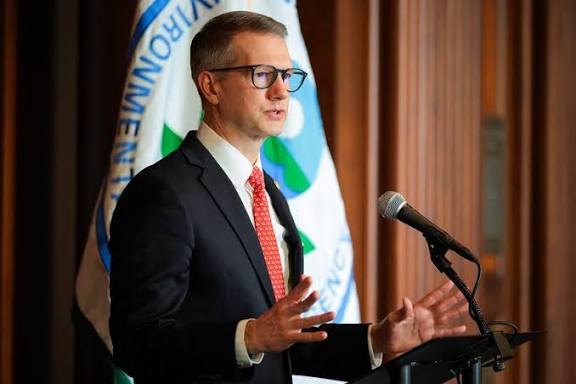
A Republican member of the U.S. House of Representatives has drawn renewed international attention to allegations that illegal mining operations tied to Chinese interests may be entangled with Nigeria’s security challenges.
Earlier this week, Representative Riley M. Moore confirmed on social media that he had delivered a detailed report to U.S. President Donald Trump outlining what he describes as “the persecution of Christians in Nigeria.”
In a post on friday, he highlighted a point he said has been overlooked in much of the coverage: the role of illegal rare earth mineral mining operations allegedly associated with Chinese actors.
Speaking on the Fox News programme The Faulkner Focus with host Harris Faulkner, Moore said that these alleged operations involve extraction of rare earth minerals materials used in modern electronics and clean-tech industries without proper permits or regulation in parts of Nigeria.
He claimed that the mining activities are run outside Nigeria’s legal framework and that profits from these activities are being used to make “protection” payments to armed Islamist groups involved in violent attacks against communities.
“One key point that has been missing from much of the coverage is that the Chinese are running illegal rare earth mineral mining operations in Nigeria,” Moore said, adding that money from these operations is allegedly flowing to radical groups who, he claims, then use it to finance violent attacks on Christian. “This cannot continue,” he added.
What Is Being Alleged?
Moore’s comments centre on two challenges he says are intertwined:
1: Illegal mining activity in Nigeria’s mineral-rich regions, particularly involving rare earth elements.
2: The potential misuse of revenue from such activity to support armed groups, including extremist factions, according to his claims.
These assertions reflect concerns by some U.S. lawmakers that weak regulation has allowed illicit mining to flourish, and that financial flows linked to these operations may help sustain violent actors.
Reactions From Nigeria and China
So far, neither the Nigerian government nor Chinese diplomatic representatives have publicly confirmed Moore’s specific allegations about illegal mining funding militia groups.
According to official statements from Abuja, the Nigerian government has rejected claims that it endorses or facilitates religious persecution or clandestine mining involvement. In a recent statement, the Nigerian government said there is no “state policy of religious persecution,” and described violence in the country as the result of complex security threats including terrorism, banditry, and organised criminality rather than directed by any one state actor or external force..
The Chinese Embassy in Nigeria has also denied allegations of financing terrorism or improper foreign mining activity, calling any such claims “completely baseless” and dismissing them as rumours. (Official embassy statements have been shared on social media and quoted in diplomatic communications.)
International and Security Context
Nigeria’s mining sector has historically faced challenges with illegal operations, including artisanal mining and unauthorised extraction, which the government has sought to regulate more effectively in recent years. The country also has a long history of security issues involving armed groups such as Boko Haram and Islamic State West Africa Province, as well as communal conflict between herders and farmers.
U.S. lawmakers, including Moore and several colleagues, have also introduced legislation aimed at increasing cooperation with Nigeria to address these challenges, including measures that would task the U.S. Secretary of State with working alongside Nigerian authorities to reduce the influence of illegal mining and militia activity.
What Comes Next
The Trump administration is reported to be reviewing the bipartisan report submitted by Moore and other members of Congress, which includes policy recommendations ranging from enhanced cooperation, possible sanctions on actors linked to violence, and support for Nigerian security efforts.
At the same time, government spokespeople in Abuja have emphasised Nigeria’s commitment to protecting citizens of all faiths and its openness to international dialogue based on mutual respect and sovereignty.