
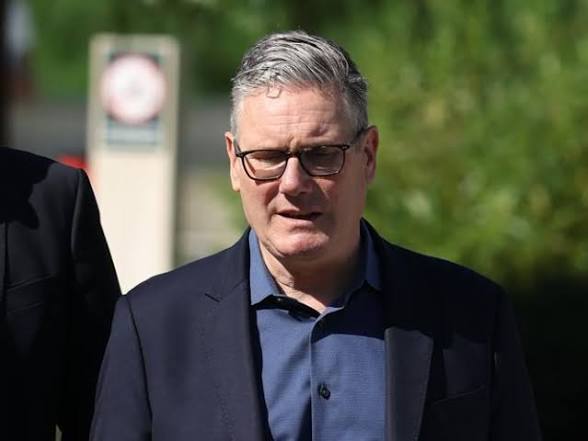
British Prime Minister Keir Starmer has announced that he will step down as leader of the Labour Party, bringing an end to a turbulent period in office that lasted less than two years and was marked by political setbacks, policy reversals, and declining public support.
Speaking outside 10 Downing Street on Monday, an emotional Starmer said his decision was guided by what he believed was best for the country.
“Every decision I have taken has been about putting the country I love first. That is why I will resign as leader of the Labour Party,” he said.
Starmer disclosed that the process of selecting a new Labour leader will begin in July. He added that he would remain prime minister until a successor is chosen, with the transition expected to be completed before Parliament reconvenes after the summer break in September.
“I will remain in post as prime minister until the contest is complete, and I will do everything I can to ensure an orderly handover of power,” he stated.
His announcement comes after months of mounting pressure within the party. Despite repeatedly insisting he intended to remain in office, Starmer faced growing criticism following a series of controversies and resignations involving senior figures in his government.
Attention has now shifted to Andy Burnham, a veteran Labour politician who recently secured victory in a key by-election, paving the way for his return to Parliament and strengthening his position as a potential contender for the party leadership.
If a new leader is chosen as expected, Britain will soon welcome its seventh prime minister in the past decade.
The timing of Starmer’s resignation is notable, arriving just one day before the 10th anniversary of the Brexit referendum, a vote that reshaped British politics and contributed to a succession of leadership changes at the top of government.
Starmer had been widely credited with rebuilding Labour’s electoral fortunes and leading the party to a decisive victory in the 2024 general election, ending 14 years of Conservative rule.
However, his administration later struggled to maintain momentum. Critics pointed to a range of unpopular decisions, including welfare reforms and debates surrounding defence spending, which weakened support for his government.
His position was further damaged earlier this year by controversy surrounding the appointment of Peter Mandelson as the United Kingdom’s ambassador to Washington, a move that drew criticism because of Mandelson’s past association with convicted sex offender Jeffrey Epstein.
At the same time, Labour faced increasing competition from Reform UK, whose growing popularity and strong performance in local elections in May added to concerns about the party’s future direction.
As he prepares to leave office, Starmer pledged his support for whoever succeeds him.
“I will also give my successor my full and unequivocal support, knowing that they will inherit a Britain that is far stronger and fairer than the one I inherited two years ago,” he said.