
Warri, Delta State — March 18, 2026
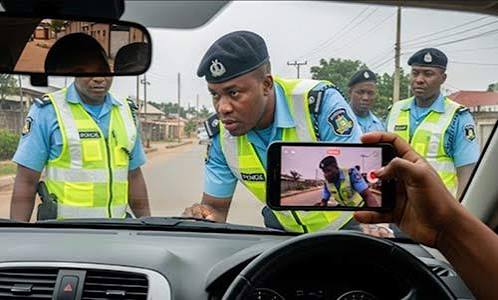
In a ruling that has sparked widespread conversation across Nigeria, the Federal High Court sitting in Warri, Delta State, has delivered a landmark judgment affirming that every Nigerian citizen has the constitutional right to record police officers performing their duties in public spaces.
Justice H. A. Nganjiwa, delivering judgment in Suit No. FHC/WR/CS/87/2025, held that police officers must wear visible name tags, display their force numbers, and must not harass, intimidate, arrest, or confiscate devices from citizens who record their activities in public.
The judgment, delivered on Tuesday, March 17, was the outcome of a fundamental rights enforcement suit filed by Maxwell Nosakhare Uwaifo, a legal practitioner based in Ekpan, Warri. Uwaifo brought the suit after an encounter with police officers at the Sapele Roundabout on May 10, 2025, while travelling from Benin to Warri, during which officers stopped him, questioned him aggressively, and threatened him when he attempted to record the interaction.
According to Uwaifo, the officers arrived in an unmarked black Toyota Sienna with no police insignia, wore no name tags, and offered no identification. When he pulled out his phone to document the encounter, one of the men threatened him with arrest. He described the officers’ behaviour as intimidating and said he feared unlawful detention.
Named as respondents in the suit were the Inspector-General of Police, the Nigeria Police Force, the Police Service Commission, and the Attorney-General of the Federation. The police did not appear in court; the AGF was represented by Babatunde Ajajogun and D. O. Tarfa.
At the heart of the case was a fundamental constitutional question: whether police officers could legally conduct stop-and-search operations without visible name tags and force numbers, and whether citizens had the right to record such interactions.
Justice Nganjiwa held that under Section 39 of the 1999 Constitution, Nigerians are entitled to freedom of expression, which includes recording law enforcement agents performing public duties. The court further ruled that it is illegal for officers to operate without proper identification.
All reliefs sought by the applicant were granted. The court awarded Uwaifo N5 million in damages for the violation of his fundamental rights, alongside N2 million as cost of litigation.
Uwaifo argued in his affidavit that anonymous policing fosters impunity, enabling extortion, assault, and unlawful detention, and that such practices violate citizens’ rights to dignity, personal liberty, and freedom of expression as guaranteed under the Constitution, the Police Act 2020, and global democratic policing standards.
The case was filed as a public interest litigation, meaning its implications extend beyond Uwaifo personally to every Nigerian citizen. Among his prayers, Uwaifo asked the court to direct the Police Service Commission to issue clear guidelines affirming the public’s right to record and report police activities in public spaces, including at checkpoints, and to mandate the discipline of any officer found to have breached these constitutional rights.
The judgment has been widely received as a significant step forward for police accountability in Nigeria, where stop-and-search operations have long been a flashpoint for citizen complaints. Civil rights groups have repeatedly called for improved police accountability, including clear identification and respect for the public’s right to record officers on duty.
In practical terms, the ruling means that any Nigerian who pulls out a phone to film a police checkpoint interaction is doing something fully protected by the Constitution and any officer who threatens, arrests, or seizes a device in response is acting unlawfully.