
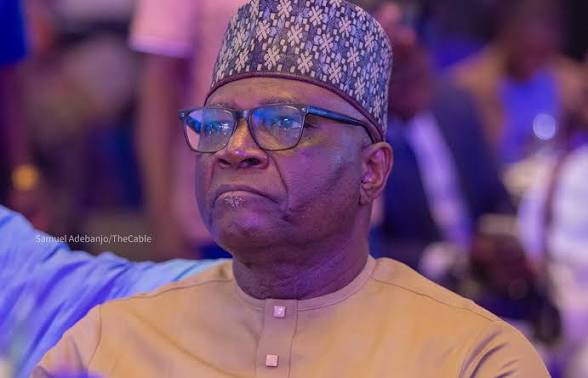
Special Adviser to President Bola Tinubu on Information and Strategy, Bayo Onanuga, has defended the policies and reforms introduced by the Tinubu administration, insisting that the President made difficult decisions to prevent Nigeria from sliding into deeper economic crisis.
In a lengthy article titled “Bola Tinubu: The Man Who Took the Bullet for Nigeria to Survive,” Onanuga argued that despite criticism from opposition figures, the administration’s reforms have already begun producing visible results across the country.
According to him, President Tinubu inherited severe economic challenges in May 2023, including fuel scarcity, rising debt servicing obligations, multiple exchange rates and an unsustainable fuel subsidy regime.
He stated that the President immediately introduced major reforms, including the removal of petrol subsidy and the floating of the naira, describing the decisions as painful but necessary for the country’s survival.
Onanuga wrote that many state governments have experienced financial relief as a result of increased allocations following the reforms. He claimed that governors across several states are now able to execute infrastructure projects and meet salary obligations more easily than before.
“States that hitherto were unable to pay salaries by May 2023, with months of unpaid obligations to their workers and pensioners, are now doing so with ease and dreaming big about infrastructure,” he said.
The presidential aide also dismissed ongoing criticism from opposition politicians, accusing them of refusing to acknowledge improvements recorded under the current administration.
According to him, economic indicators such as the performance of the Nigerian stock market reflect growing investor confidence in the economy. He noted that the All-Share Index and market capitalisation have grown significantly since Tinubu assumed office.
Onanuga further highlighted road, rail and energy projects being undertaken by the Federal Government, including the Lagos-Calabar Coastal Highway and the Sokoto-Badagry superhighway, which he described as transformative projects.
Defending the administration’s borrowing plans, he argued that such large-scale infrastructure projects could not be funded solely through federal allocations.
“How else could the roads have been built if we rely only on FG’s share from FAAC?” he asked.
The presidential spokesman also pointed to programmes such as NELFUND and CREDICORP as examples of policies aimed at supporting students and civil servants.
On security, Onanuga admitted that insecurity remains a challenge but maintained that the Federal Government continues to equip security agencies to combat terrorism, banditry and kidnapping.
He said the President remains committed to stabilising the country despite political attacks and public criticism.
“The man who has taken the bullets to make Nigeria survive a fiscal disaster is even more willing to take additional bullets to make all Nigerians safe,” Onanuga stated.