
The Federal Government has dismissed claims that it spent more than ₦8 trillion outside the 2025 budget, insisting that the allegations are based on a misrepresentation of the International Monetary Fund (IMF) 2026 Article IV Consultation Report.
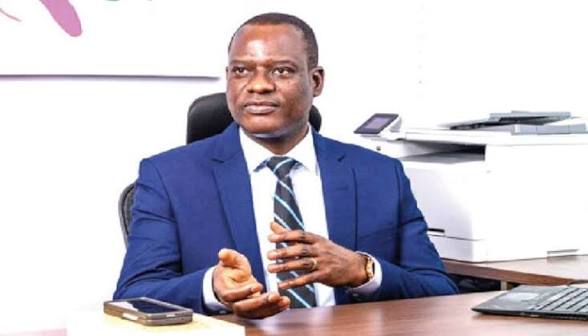
In a statement issued on Sunday by the Federal Ministry of Finance and signed by the Minister of Finance and Coordinating Minister of the Economy, Taiwo Oyedele, the government said reports suggesting that about two per cent of Nigeria’s Gross Domestic Product (GDP) was spent without legislative approval were inaccurate.
According to the ministry, the claims “are incorrect and risk misleading the public regarding the government’s financial management.”
The government stressed that it does not operate what it described as a “shadow budget” and that all public expenditure is carried out within the provisions of the Nigerian Constitution and laws passed by the National Assembly.
“For the avoidance of doubt, the Federal Government does not operate a ‘shadow budget’ or expend public funds outside the constitutional and statutory framework established for public finance.”
The ministry explained that federal spending is authorised through Appropriation Acts, Supplementary Appropriation Acts and other statutory provisions approved by the National Assembly.
It added that multi-year capital projects, statutory transfers, debt servicing and legally approved intervention programmes are recognised components of Nigeria’s public finance system and should not be mistaken for unauthorised spending.
It further argued that anyone alleging that trillions of naira were spent illegally should provide evidence identifying the specific projects involved.
“It is inaccurate to suggest that trillions of naira have been secretly spent outside legislative approval. Such allegations should have identified the specific projects purportedly executed without appropriation or legal authority and present credible evidence in support of the claim.”
The ministry also clarified that differences between figures contained in annual budgets and those reflected in international fiscal reports stem from variations in accounting and reporting standards, rather than unlawful expenditure.
According to the statement, the IMF’s observations focused on the presentation and completeness of Nigeria’s fiscal reporting and not on the legality of government spending.
“Indeed, the IMF’s observation relates primarily to the comprehensiveness, timing and presentation of fiscal reporting rather than the legality of expenditure.”
The government added that reforms are already underway to improve budget transparency and align Nigeria’s fiscal reporting with international standards.
It noted that President Bola Ahmed Tinubu had previously asked the National Assembly to discontinue the practice of running multiple and overlapping budgets in favour of a unified budget framework.
The ministry maintained that recent reforms have strengthened public financial management through improved revenue administration, digitalisation of government financial processes and enhanced treasury management, adding that these efforts have received recognition from the IMF and other international institutions.
“Public debate is both welcome and essential in a democratic society. However, it should be based on facts and an accurate understanding of Nigeria’s constitutional and fiscal framework.”
The statement comes hours after former presidential candidate Peter Obi alleged that the IMF’s 2026 Article IV Consultation Report showed that about ₦8.83 trillion in 2025 expenditure was not reflected in the national budget.
Obi described the development as evidence of “grand corruption” and accused the Tinubu administration of poor fiscal management, renewing his call for the President to resign.
Responding indirectly to those allegations, the Federal Government insisted that no public funds were spent outside the legal budgetary process and urged Nigerians to distinguish between technical fiscal reporting issues and claims of financial misconduct.