
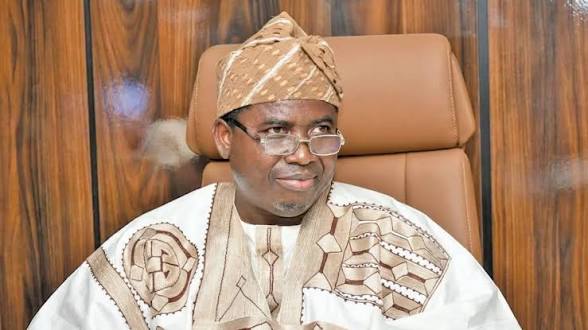
The Chairman of the Independent National Electoral Commission (INEC), Professor Joash Ojo Amupitan (SAN), has assured Nigerians that ballot box snatching and the manual alteration of election results have become things of the past, citing the commission’s strengthened legal framework and technological systems ahead of the 2027 general elections.
Amupitan made the remarks on Wednesday while receiving the Director-General of the National Orientation Agency (NOA), Mallam Lanre Issa-Onilu, during a courtesy visit to the INEC headquarters in Abuja. The meeting also focused on strengthening collaboration between both agencies on voter education ahead of the 2027 elections.
The INEC chairman said preparations for the elections must begin immediately, recalling that the presidential election is scheduled for January 16, 2027, while governorship elections will be held on February 6, 2027.
He warned that voter apathy and the spread of misinformation remain major threats to credible elections, stressing the need for sustained public enlightenment.
“We need to teach them why their vote matters and how our new legal and technological safeguards protect their choices. We must look the rural farmer, the marketplace woman, and the disillusioned urban youth in the eye and explain to them, in the language they understand, that because of the current technological infrastructure, the era of snatching ballot boxes or rewriting results manually is gone,” Amupitan said.
The INEC boss said recent elections in the Federal Capital Territory and Ekiti State demonstrated improvements in the commission’s electoral processes, including the early opening of most polling units, biometric accreditation using the Bimodal Voter Accreditation System (BVAS), and faster uploads of results to the INEC Result Viewing Portal (IReV).
However, he noted that the elections also exposed persistent challenges, particularly low voter turnout and confusion among many voters over polling unit reorganisation and registration transfers.
“This is a clear indicator that while our technology is moving forward, civic familiarity with the evolving system is lagging. It is a loud diagnostic signal that far more needs to be done in the area of intensive, deep-rooted voter education, and it proves that we cannot afford to wait until the eve of the 2027 polls to start talking to our people,” he said.
Amupitan maintained that technological advancements alone cannot guarantee credible elections without an informed electorate.
“We can purchase the finest BVAS machines, we can optimise the IReV to international standards, and we can map out the most logistical routes for material deployment. But all of these technological and administrative triumphs mean nothing if the citizens remain detached, cynical, or completely uneducated about the power of their votes,” he added.
Describing the National Orientation Agency as Nigeria’s leading institution for civic orientation, the INEC chairman said both organisations have a constitutional responsibility to deepen democratic awareness across the country.
He called for a nationwide grassroots campaign against vote-buying and misinformation, urging the NOA to equip its field officers with accurate knowledge of INEC’s electoral processes.
“Together, INEC and the NOA must rewrite this narrative. We need to co-create a decentralised, grassroots voter education campaign that goes beyond simply telling people when to vote,” he said, adding that the partnership between both institutions “is not a secondary option; it is an absolute necessity.”
Amupitan also emphasised the need for modern communication strategies, saying voter education should be digital, community-driven and tailored to young people.
He pledged INEC’s full support for the collaboration, stating, “Our doors are wide open. We are ready to pool our resources, share our data, and give your teams all the institutional support required to make this collaboration a resounding success.”
Earlier, NOA Director-General Lanre Issa-Onilu said the agency was committed to working closely with INEC to improve voter participation, noting that the number of Nigerians who vote during elections remains significantly lower than the number of registered voters.
“We are going into communities with our advocacy to the people,” Issa-Onilu said.
“We both have in our hands civic education and voter education. We humbly seek support from INEC, which we are already having, but we believe it can be better. We need to increase the number of people who come out to vote. Those who come out to vote are very low compared to those on the register. We need to even let them know everything beyond the elections to ensure that Nigerians can keep track of cases in court,” he added.