
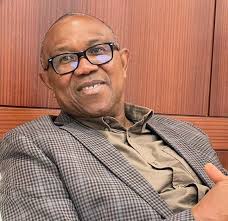
Labour Party’s 2023 presidential candidate, Peter Obi, has outlined his plans to reform Nigeria’s education and healthcare sectors, describing both as the foundation for building a productive and prosperous nation.
Obi unveiled the proposals on Thursday in the second part of his policy series titled, “ where he expanded on the vision he first introduced on July 1.
According to the former Anambra State governor, meaningful national development cannot be achieved without significant investment in education, healthcare and human capital development.
“Today, July 16th, in the middle of July, I wish to expand on these two critical pillars – education and healthcare – because they are the bedrock upon which every prosperous nation is built,” Obi wrote.
He argued that strengthening the two sectors would create opportunities for millions of Nigerians while addressing some of the underlying causes of insecurity.
“They are the cornerstones of the foundation that will ensure that a son of nobody can become somebody and remove many from the ranks of the disaffected who often become tools in the insecurity challenges confronting us,” he said.
Read Also: Nigeria’s Education Crisis Goes Beyond JSS/SSS Policy – Peter Obi Says
Obi dismissed the growing notion among some young Nigerians that education no longer guarantees success, insisting that education remains one of the strongest drivers of personal and national development.
“Nothing, therefore, could be further from the truth than the claim by some young people that ‘education is a scam.’ Education, when combined with good health, provides the ladder for individual upward mobility and drives economic growth for the nation,” he stated.
Citing global examples, Obi said countries such as Singapore and China transformed their economies by prioritising education and aligning learning with national development goals.
He referenced Nobel Prize-winning economist Angus Deaton’s book, The Great Escape: Health, Wealth, and the Origins of Inequality, arguing that quality education and accessible healthcare remain defining features of prosperous societies.
As part of his proposals, Obi said he would pursue reforms that encourage stronger collaboration among the federal, state and local governments in managing the education sector.
He explained that primary education should be anchored at the community and local government levels, with greater involvement of parents and school curricula designed to reflect the economic realities and productive strengths of each locality.
The former presidential candidate also pledged support for state governments to expand Technical and Vocational Education and Training (TVET) alongside conventional secondary education through grants and other incentives.
He added that universities would be encouraged to specialise in key areas of teaching and research to improve their global competitiveness and produce graduates equipped with skills needed for the future economy.