
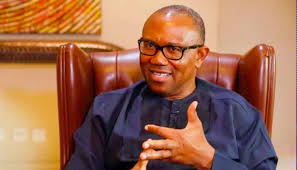
Peter Obi has called for urgent reforms in Nigeria’s education sector, warning that the country’s education crisis is no longer about inadequate funding alone, but a deep failure of leadership, accountability, and governance.
In a statement released on Wednesday, Obi reacted to recent comments by the Minister of Education concerning the poor educational performance of Nigeria’s North-West and North-East regions despite receiving nearly 80 percent of donor funding allocated to education over the past decade.
Read: Kano Government Closes Schools for Eid-el-Kabir Holiday
According to Obi, the situation exposes serious concerns about how public funds and donor interventions are being managed, stressing that financial resources alone cannot guarantee quality education without transparency, commitment, and measurable outcomes.
The former Anambra governor lamented that millions of Nigerian children still lack basic literacy and numeracy skills despite years of government budgets, donor support, and intervention programmes targeted at improving education across the country.
He described the development as a national tragedy, noting that countless children are being denied opportunities for a better future due to systemic inefficiency and corruption within the education sector.
Obi further stated that Nigeria’s greatest asset is its human capital, not oil or politics, warning that neglecting education would only worsen poverty, insecurity, unemployment, and instability in the country.
Calling for a national conversation on the utilisation of education funds, he insisted that every kobo spent on education should translate into improved literacy rates, increased school enrolment, better teacher performance, and stronger learning outcomes.
Drawing comparisons with countries such as China, India, Indonesia, Vietnam, and Bangladesh, Obi said nations that achieved rapid development did so by making deliberate and sustained investments in education.
He urged Nigerian authorities to move beyond rhetoric by building more schools, training teachers, modernising educational systems, strengthening monitoring mechanisms, and ensuring that education interventions directly benefit children rather than political and bureaucratic interests.
“A nation’s progress is closely linked to the quality of its education system,” Obi stated, expressing optimism that a brighter future remains possible for Nigeria if the right priorities are embraced.