
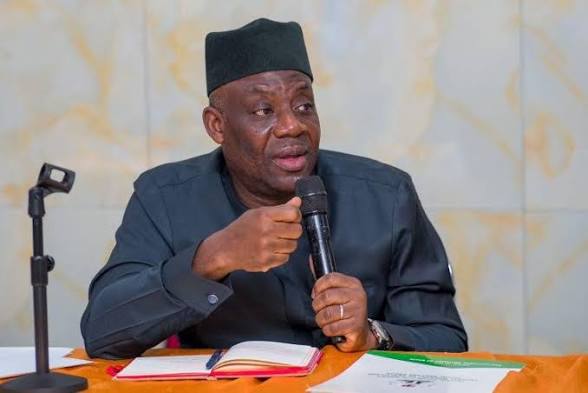
Nigeria’s Minister of Education, Tunji Alausa, has claimed that fewer Nigerians are now travelling abroad for studies, insisting that recent reforms in the country’s education sector are beginning to restore confidence in local universities.
The minister made the statement during an interview on Channels Television while reacting to reports that Nigeria ranked among the countries with the highest number of students studying overseas.
According to him, the figures often cited were largely based on 2023 data, a period he described as one of major instability in Nigeria’s tertiary education system due to poor academic continuity and inadequate investment in universities.
Alausa argued that the situation has changed under the current administration, noting that Nigerian universities now enjoy more stable academic calendars and improved learning conditions.
“We’ve seen a precipitous drop in the number of students going out. Our tertiary institutions are better now. We have academic continuity,” the minister reportedly said during the interview.
He also pointed to the increasing popularity of programmes such as the Joint Universities Preliminary Examinations Board (JUPEB), saying more students now prefer completing advanced preparatory studies within Nigeria rather than travelling abroad for similar qualifications.
The minister further cited the growing competition for admission into top institutions, including the University of Lagos, as evidence that confidence in Nigerian universities is gradually improving.
However, his remarks have sparked debate online, with many Nigerians arguing that economic hardship, visa restrictions and the rising cost of foreign education may also be contributing to the reduction in outbound student migration rather than improvements in the local education system alone.
Recent international education reports have continued to show high numbers of Nigerians studying abroad, especially in countries such as the United Kingdom, Canada and the United States, amid concerns over strikes, infrastructure deficits and funding challenges affecting local universities.