
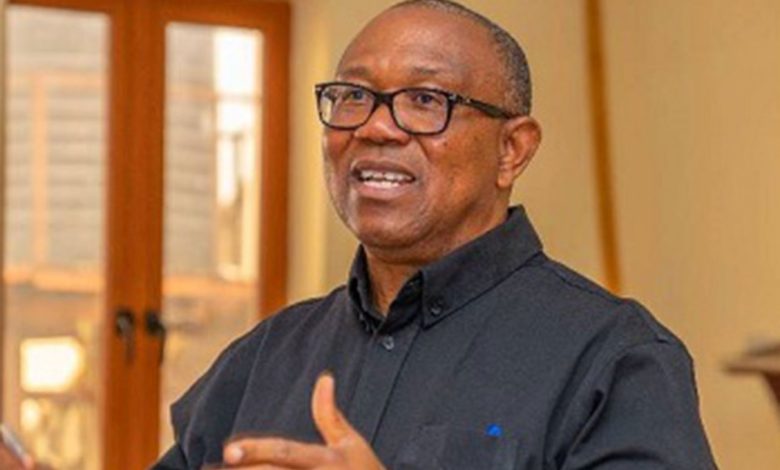
Former presidential candidate Peter Obi has raised serious concerns over a recent World Bank report revealing that Nigeria lost a staggering ₦34.44 trillion in revenue leakages over a three-year period, despite the Federation’s total revenue reaching ₦84 trillion during the same timeframe.
In a strongly-worded statement posted on social media on Saturday, Obi described the situation as “institutionalised corruption on a massive scale,” noting that the missing 41% of Federation Revenue exceeds the combined capital expenditure allocations in the 2024 and 2025 Appropriation Bills, which totaled ₦34 trillion.
Drawing parallels to Nigeria’s past financial scandals, the Labour Party leader recalled the 1994 Okigbo Panel report, which revealed that $12.4 billion from Gulf War oil windfall revenues could not be accounted for—a revelation that sparked nationwide outrage at the time.
“In 1994, when the Okigbo Panel reported about $12.4 billion from the Gulf War oil windfall as unaccounted for, Nigerians were outraged and the nation shook with indignation. Today, an even more troubling situation appears to be unfolding, yet it is met with a disquietening silence,” Obi stated.
The former Anambra State governor highlighted what he termed a “lethal paradox” in Nigeria’s fiscal reality: “Earning more as a nation, yet having less to invest in healthcare, education, and infrastructure.”
According to Obi, systemic deductions from 2025 have enabled certain agencies to capture more resources than entire states and critical ministries combined, creating a situation where Nigeria’s revenue generation does not translate into developmental impact.
“These leakages explain why countries with fewer resources are out-performing us across key development indices. With such a broken system, how can we fix power, strengthen our schools, build resilient healthcare, or develop critical infrastructure?” he questioned.
Obi insisted that Nigeria’s economic challenges are not rooted in scarcity but in mismanagement and corruption. “Nigeria has no business being poor. We must stop these leakages through disciplined, transparent leadership driven by character,” he declared.
He called for urgent action to redirect what he described as “hijacked resources” back to the Nigerian people, expressing optimism that with collective resolve, the country could join the league of developed nations.
The World Bank report and Obi’s commentary come at a time of heightened economic pressure on Nigerians, with inflation, currency devaluation, and fuel subsidy removal compounding the cost-of-living crisis across the country.